
Predictive AI-Driven Asset Management for Pipe Reliability
AI-powered predictions for reliable pipe maintenance.
The Opportunity
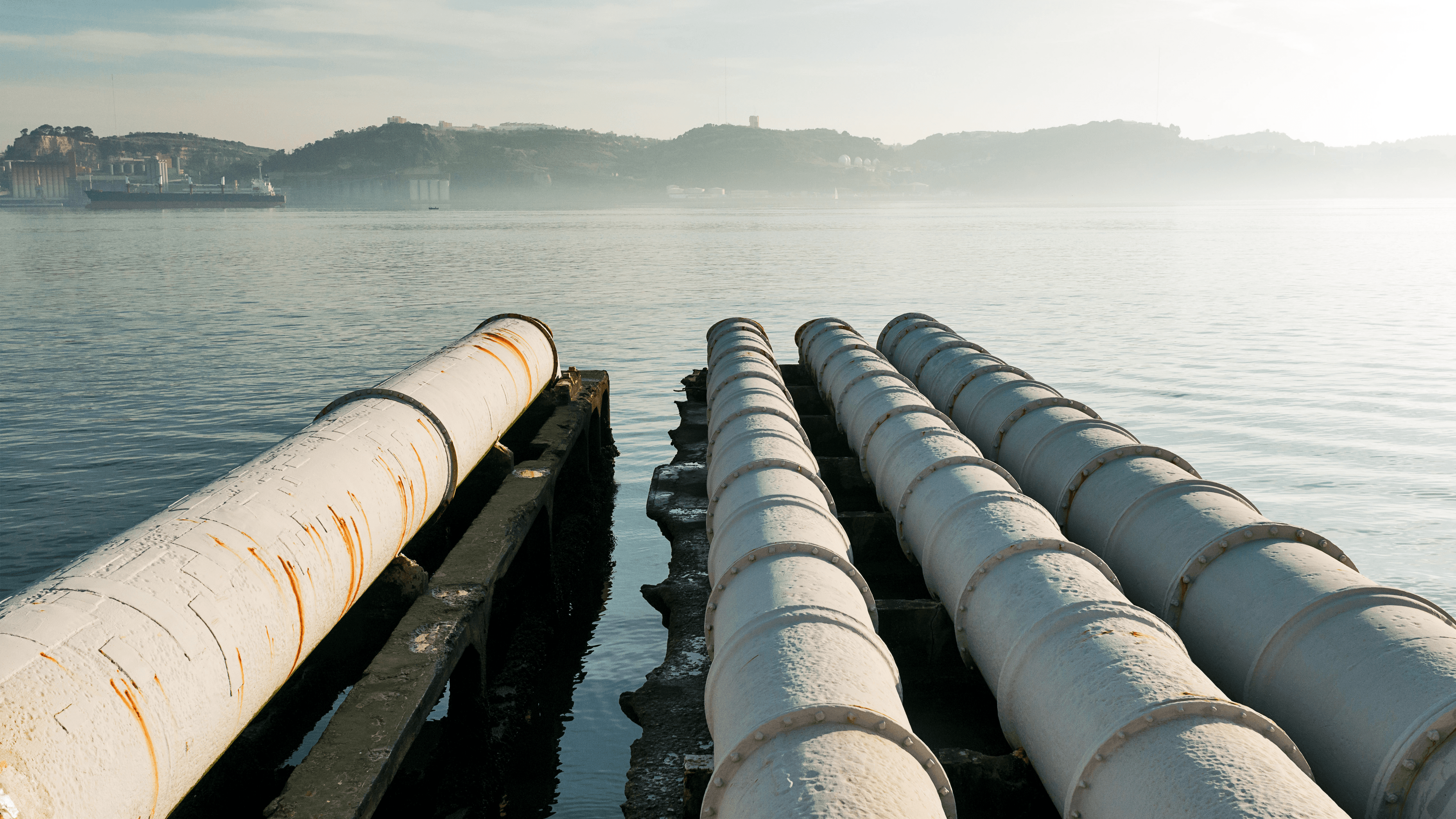
Aquatherm polypropylene water pipes in our defence client’s asset portfolio were experiencing premature failures due to degradation, primarily driven by high temperatures and copper ions in the water, which presented both financial and reputational risks. Despite a design lifespan of 35 years, over 111 failures were recorded across 46 assets by 2019. Accurate, evidence-based prediction of pipe failures was essential to meet contractual obligations for asset reliability at the 2041 handover and to minimise unnecessary maintenance and replacement costs through to 2045.
What we did
✔︎ Designed and deployed machine learning models to predict failure probability and generate annual failure profiles for every pipe element. ✔︎ Optimised the use of Oxidative Induction Time (OIT) as a key predictive feature and fine-tuned test serial schedules for maximised model accuracy. ✔︎ Applied advanced feature engineering and statistical analysis to uncover the key drivers of pipe degradation and validate failure causes. ✔︎ Enhanced model granularity to predict failures at sub-element level and support more targeted, cost-effective replacement strategies. ✔︎ Built secure, automated data pipelines to ensure reliable data ingestion and enable continuous, real-time model retraining. ✔︎ Integrated model outputs and evidence-based insights into Power BI dashboards for transparent performance tracking and decision support.
The Results
✔︎ Identified 17 statistically significant features influencing OIT outcomes and degradation rates ✔︎ Annual failure profile forecasts generated, supporting proactive asset management and long-term risk mitigation ✔︎ Enhanced identification of root causes of pipe deterioration, guiding targeted maintenance and intervention strategies ✔︎ Model enabled strategic asset assessment, potentially reducing unnecessary pipe replacements at 2041 handover ✔︎ Monthly processing capacity of 450 OIT test serials achieved across multiple assets ✔︎ Established ongoing model monitoring, maintenance, and reporting protocols including automatic detection and mitigation of data drift for sustained predictive accuracy, explainability, and strong evidence for asset management decisions.
17
key predictive features identified for degradation modelling
How we did it
Leveraging Python and industry-standard ML libraries (Scikit-learn, Pandas, NumPy), we built an end-to-end predictive analytics pipeline, combining advanced statistical analysis and machine learning techniques: ✔︎ Feature selection and engineering: Analysed historical failures and asset metadata to identify and engineer the most predictive features including Oxidative Induction Time (OIT), copper content, temperature exposure, and categorical asset information. ✔︎ Model development: Built probabilistic ML models (e.g., NGBoost for OIT prediction; exponential decay models for future deterioration) to forecast both failure probability and failure timelines at asset and sub-element level. ✔︎ Data pipeline automation: Implemented automated ETL pipelines to ingest OIT test results and asset updates, enabling real-time dataset enrichment and seamless model retraining. ✔︎ Model interpretability: Used explainable AI tools (such as SHAP) to provide clear, actionable rationales behind every failure prediction. ✔︎ Evidence-based reporting: Integrated predictive outputs directly into Power BI dashboards for live performance monitoring, stakeholder transparency, and strategic planning. ✔︎ Compliance and security: Ensured all data handling followed strict ISO 27001 security protocols and regulatory standards, supporting trustworthy, compliant operations.
