Space
Intelligent systems powering modern space operations.

Introducing AI in Space
Space organisations operate at the frontier of engineering precision, constrained data environments and long development cycles. Satellite components must meet strict performance thresholds, mission systems must function autonomously, and design iterations can take days or weeks to verify. At the same time, supply chain constraints are placing increasing pressure on space engineering programmes, data volumes are accelerating and autonomy is becoming essential across navigation, Earth observation and deep space missions.
AI is increasingly embedded across the space ecosystem, from autonomous navigation and collision avoidance to onboard image processing and supply chain management. Generative models, reinforcement learning systems and domain adapted neural networks are enabling faster design exploration, more intelligent mission control and improved system resilience.
ADSP has supported these advances through applied research and production ready systems, including our generative AI collaboration with the European Space Agency, which demonstrates how specialised agents can accelerate engineering workflows and strengthen validation across satellite communications design. The agent capabilities outlined below reflect how these systems are applied across modern space programmes.
Executive Opinion
How do you see AI reshaping the space sector over the next five years?
“AI is fundamentally altering how organisations approach engineering, operations, and exploration in the space domain. From real-time satellite health monitoring to advanced design automation, machine learning models are making systems smarter, more autonomous, and more efficient. The capability to generate unprecedented designs and insights, many of which exceed human intuition, marks a paradigm shift. Collaborations, such as ours with ESA, demonstrate that trusted partnerships between data science and engineering teams are key to driving this transformation. Ultimately, AI will be integral to reducing costs, accelerating innovation, and ensuring safer and more sustainable missions.”

Maddy Clements
Lead Data Scientist, ADSP
Client Success Story
ADSP partnered with the European Space Agency to accelerate satellite communications design using generative AI. In a nine month programme, we delivered three validated proof of concepts including a neural network optimised antenna, a text to CAD system that reduced design time from days to under 20 minutes, and a fine tuned diffusion model for satellite imagery generation.
AI Agents for Space
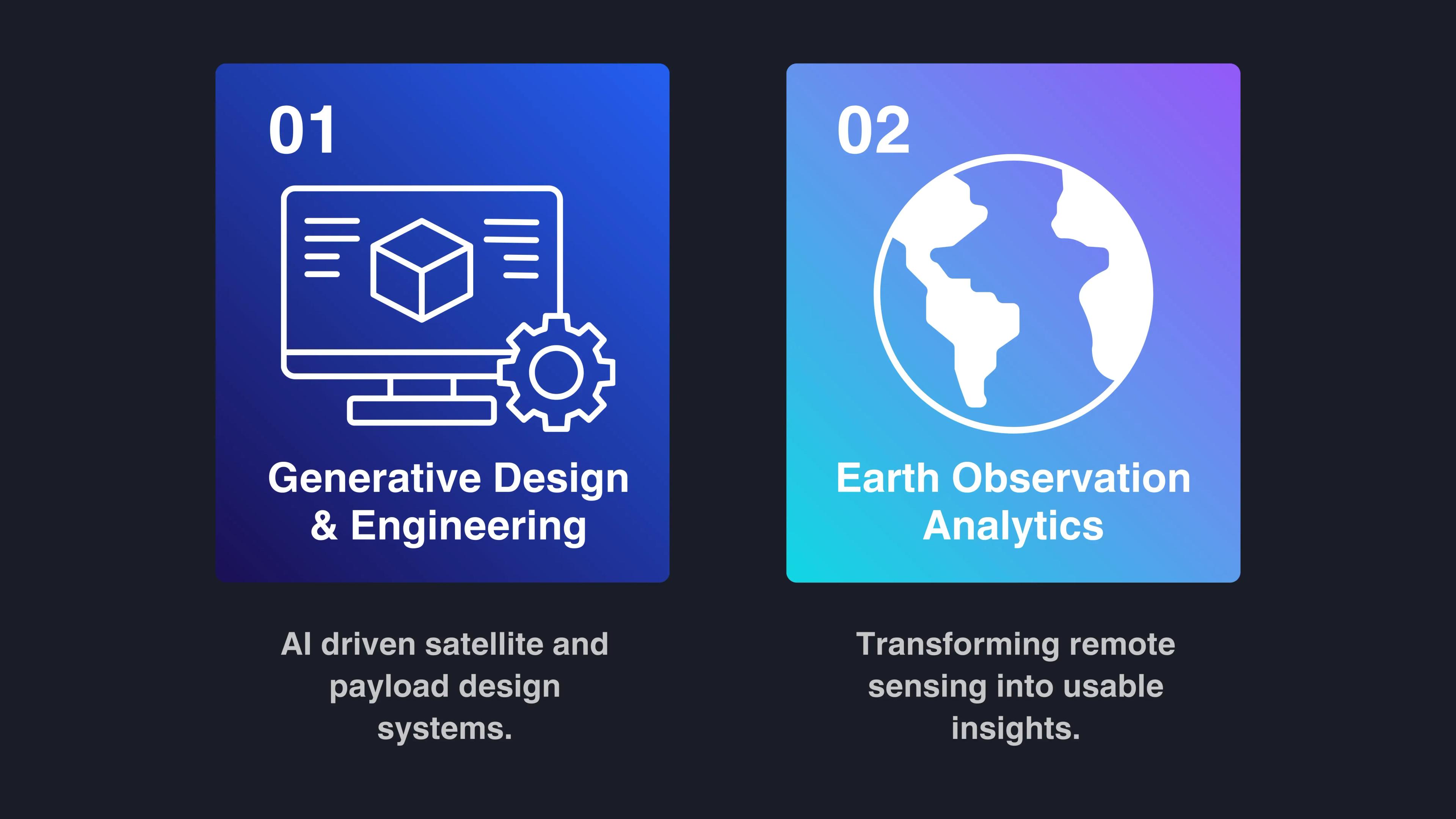
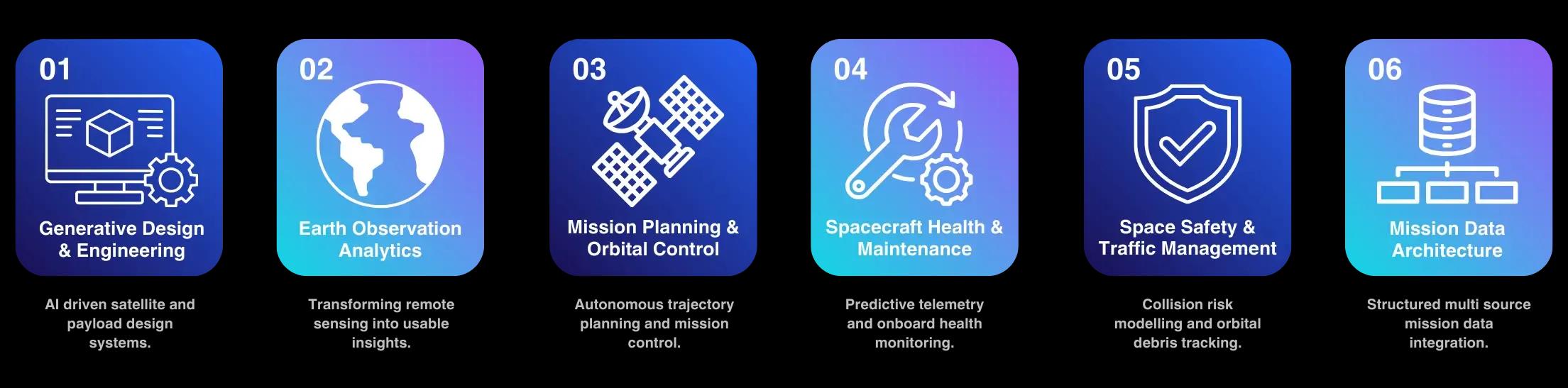
Generative Engineering and Design
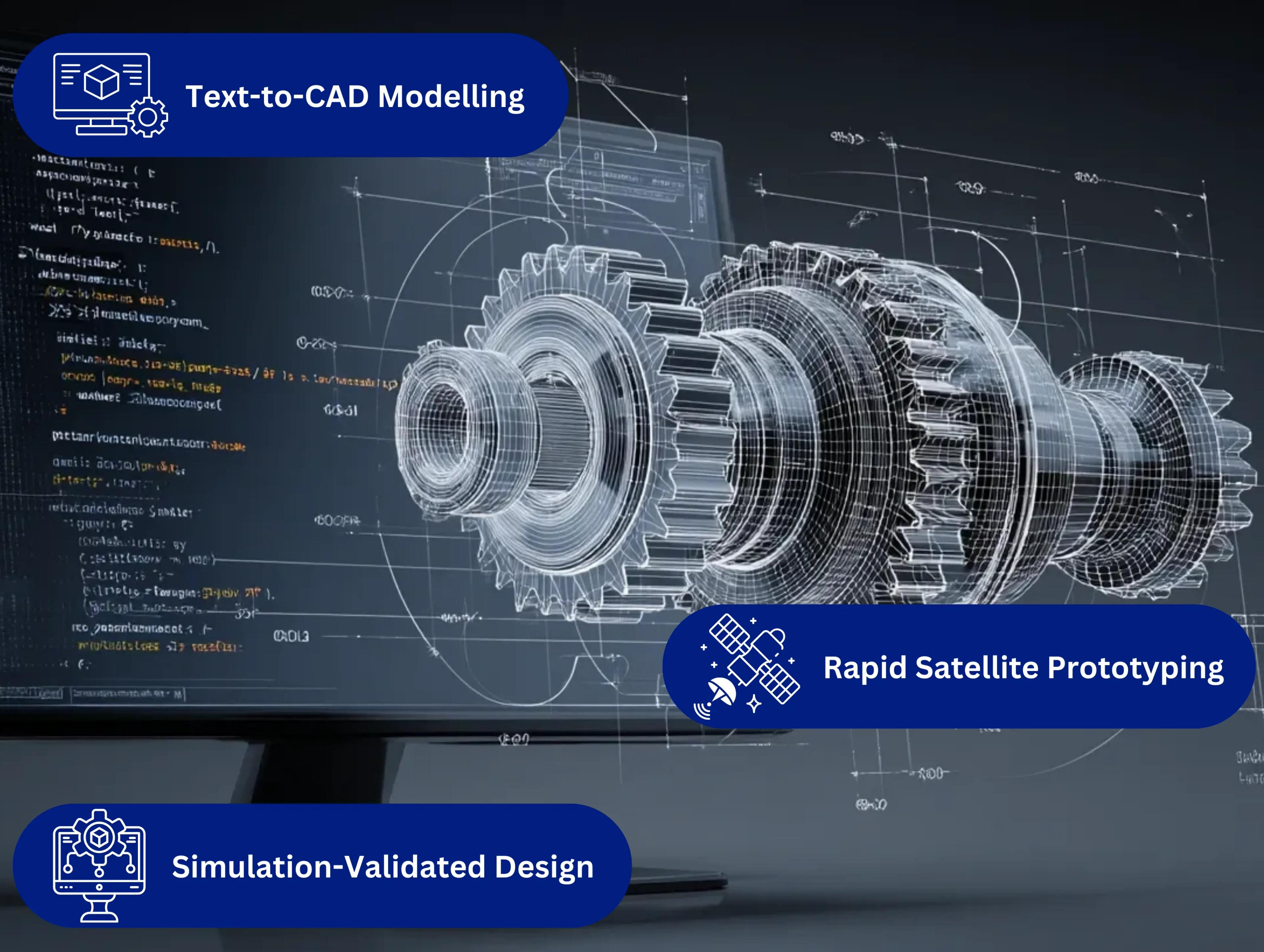
AI agents that accelerate satellite and payload design while maintaining simulation backed validation.
Key Agents:
💠 Text-to-CAD Agent: Turns structured engineering inputs into executable parametric 3D models using LLM driven code generation.
💠 Antenna Design Agent: Generates high performance choke ring geometries using parametric datasets and simulation validation.
💠 Simulation Feedback Agent: Feeds electromagnetic and structural simulation outputs back into model refinement to ensure viable designs.
Earth Observation Analytics
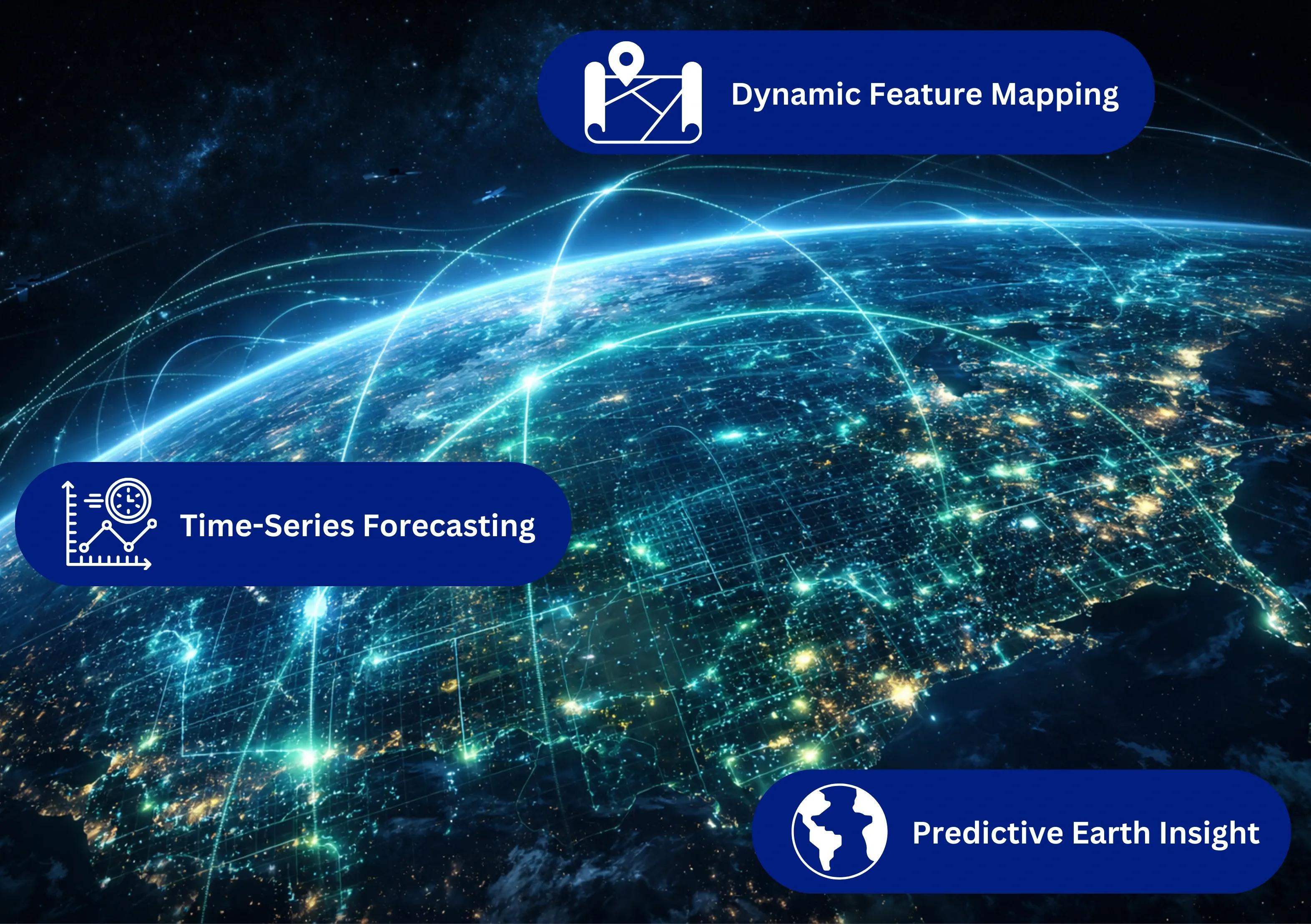
AI agents that transform raw remote sensing data into operational, environmental and strategic insight.
Key Agents:
💠 Feature Mapping Agent: Detects infrastructure change, crop health variation, marine activity or asset movement with sub meter precision.
💠 Time Series Forecasting Agent: Projects agricultural yield, urban expansion or environmental risk using longitudinal Earth observation data.
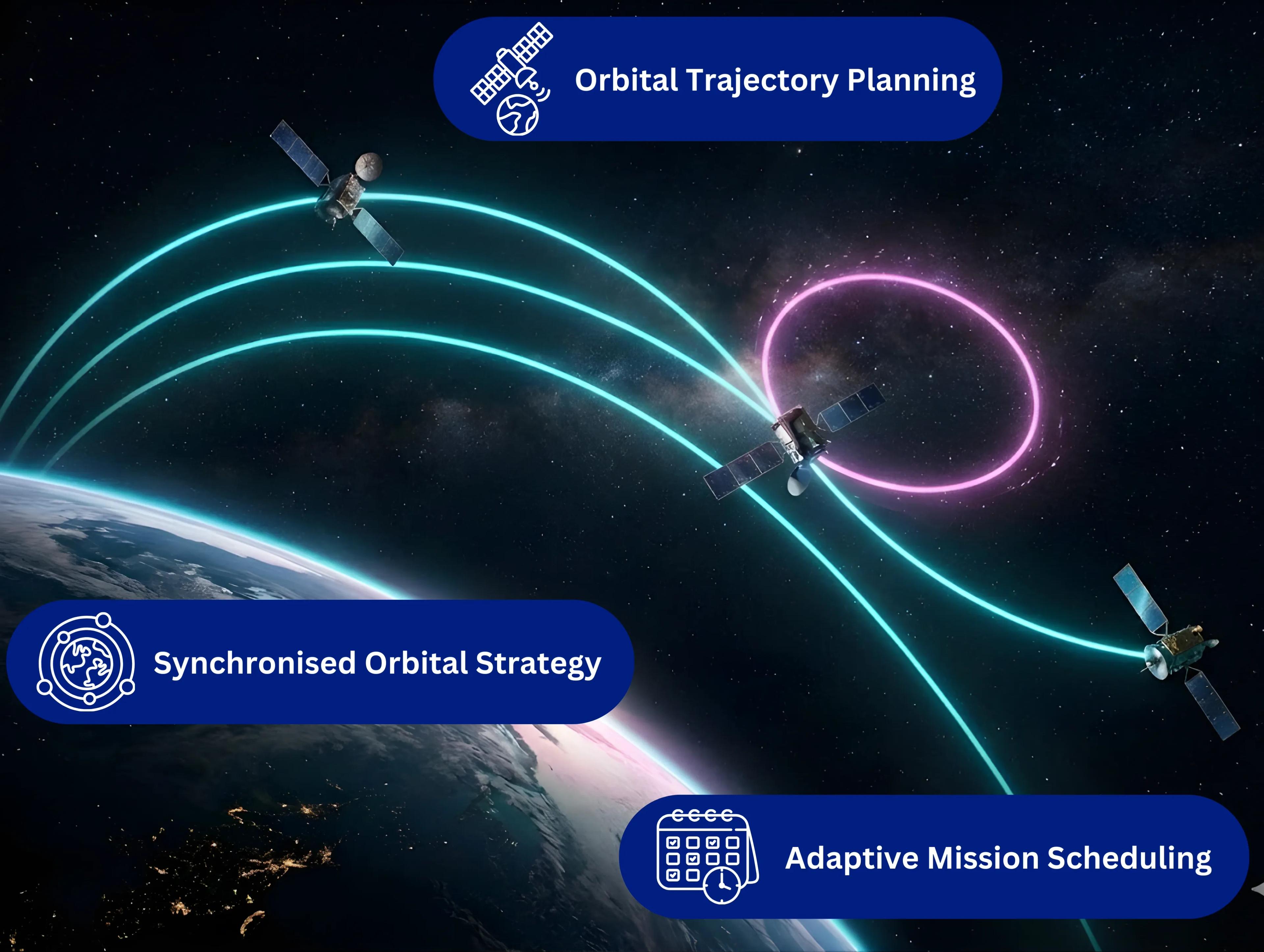
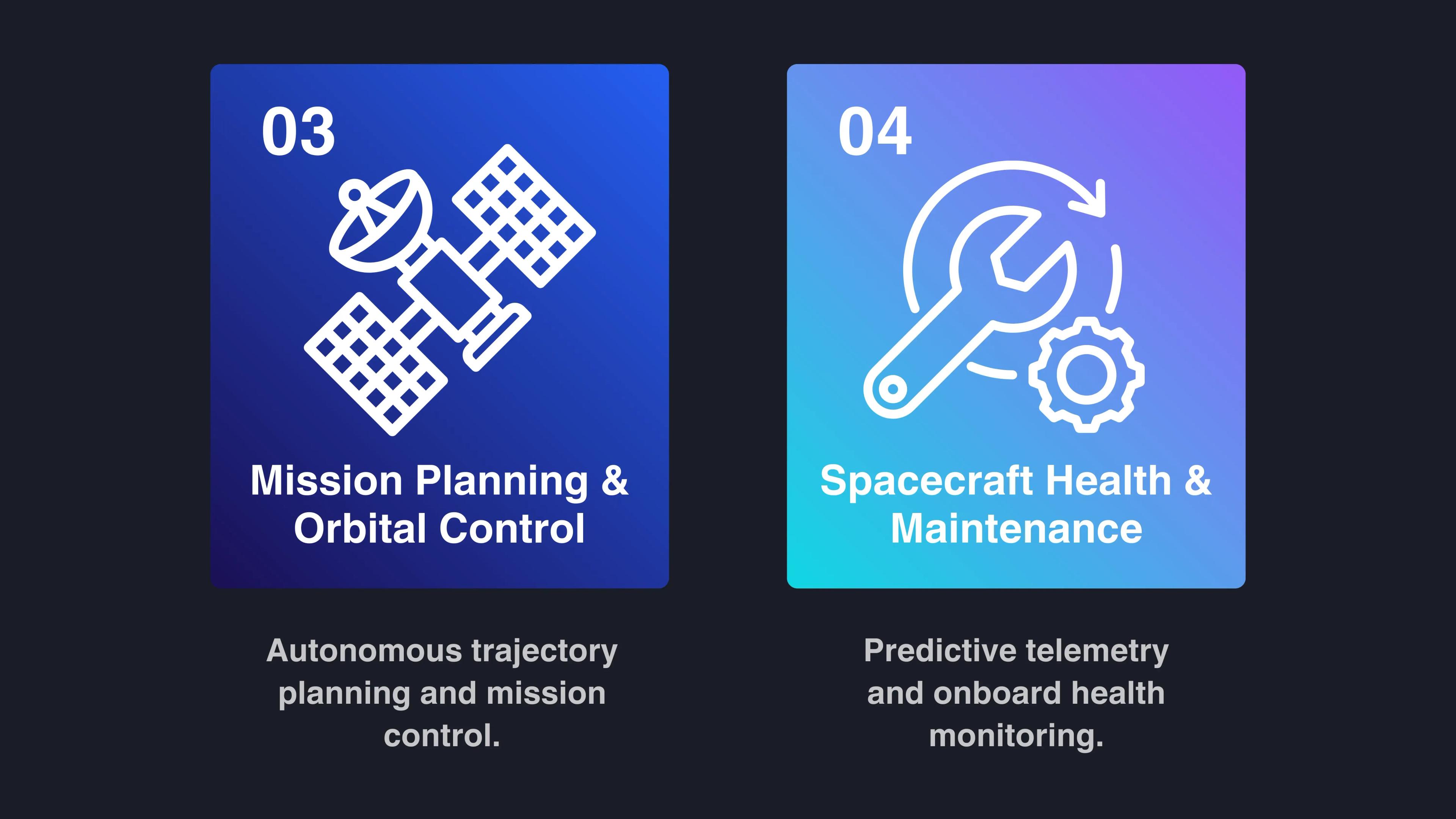
Mission Planning
AI agents that automate trajectory planning, resource allocation and in mission decision making.
Key Agents:
💠 Orbital Manoeuvre Agent: Calculates optimal orbit insertion, phasing and station keeping strategies to minimise fuel usage.
💠 Mission Resource Scheduler: Balances power consumption, thermal constraints and data downlink windows across mission timelines.
💠 Attitude Control Agent: Learns adaptive spacecraft orientation strategies under changing environmental conditions.
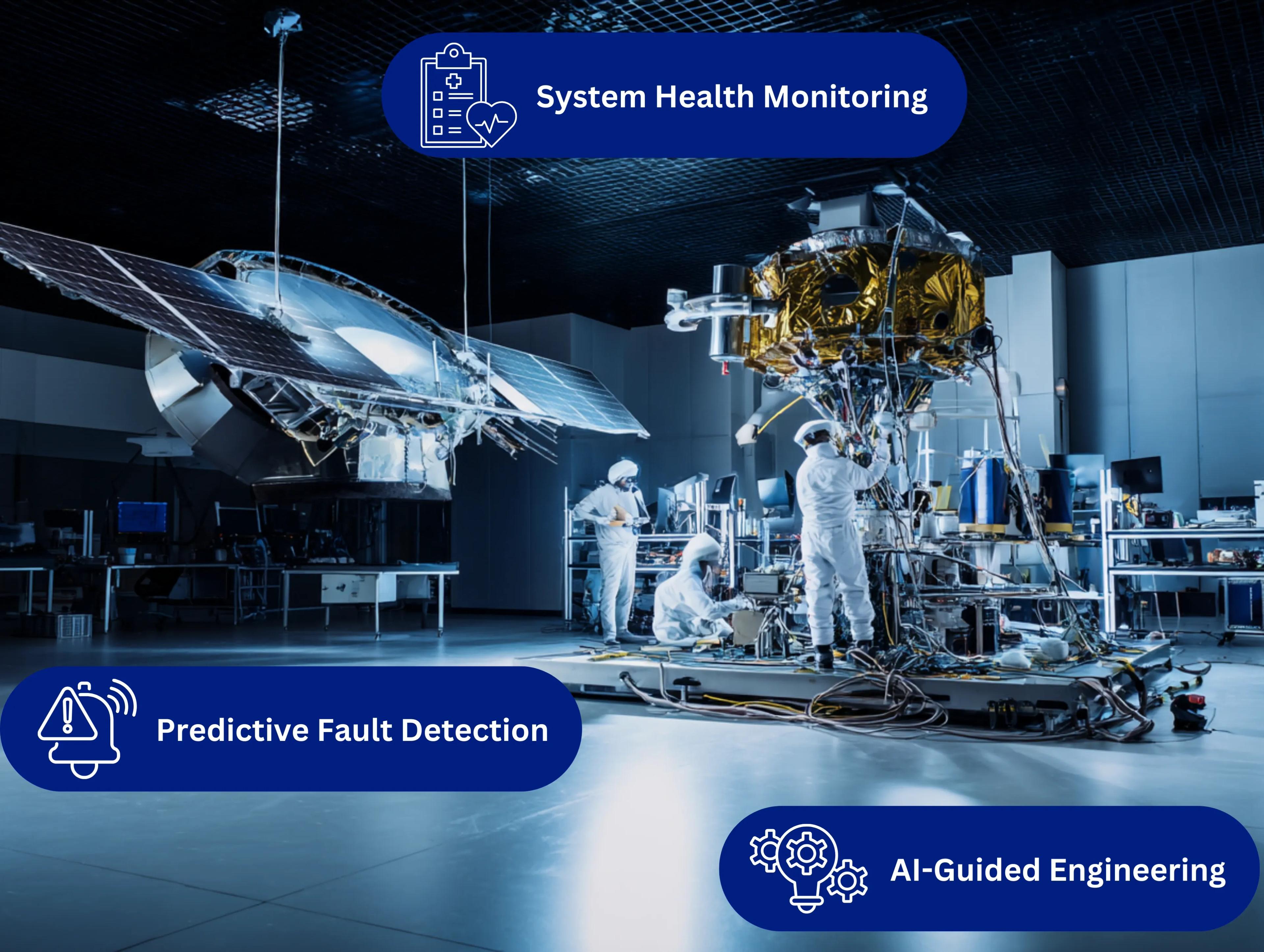
Spacecraft Maintenance
AI agents that monitor telemetry and extend asset lifespan through predictive diagnostics.
Key Agents:
💠 System Health Agent: Analyses telemetry streams to detect subtle fault signatures in onboard systems.
💠 Fault Detection Agent: Forecasts component degradation to support servicing and decommission planning.
💠Life Estimation Agent: Forecasts remaining component lifespan to support servicing and decommission planning.
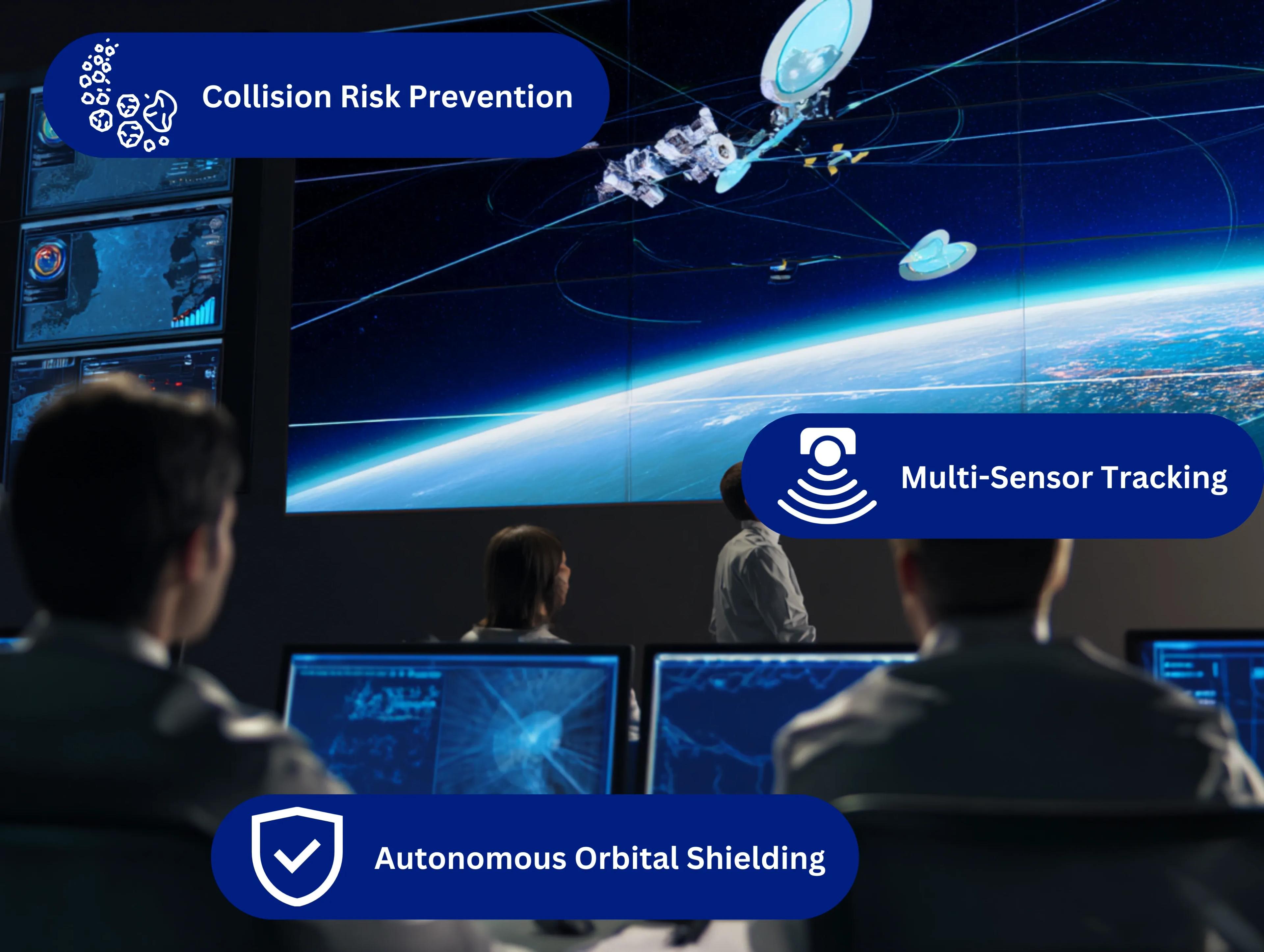
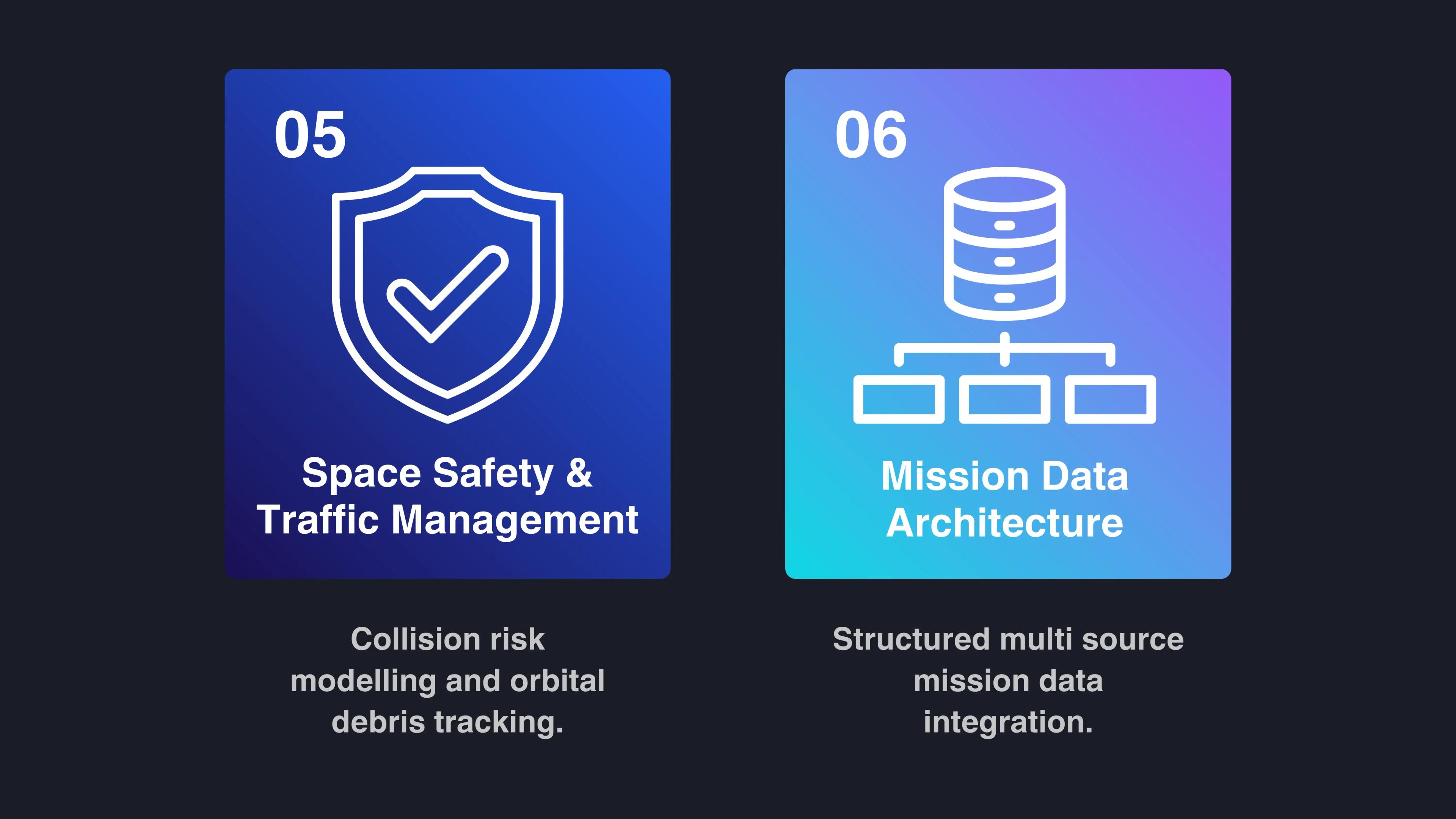
Space Safety
AI agents that preserve orbital integrity through predictive modelling and debris intelligence.
Key Agents:
💠Collision Risk Assessment Agent: Calculates probability of collision between active spacecraft and debris fragments.
💠 Multi Sensor Tracking Agent: Fuses radar, optical and telemetry feeds into a unified orbital object catalogue.
💠 Debris Re-Entry Forecasting Agent: Models orbital decay to forecast re entry windows and impact risk zones.
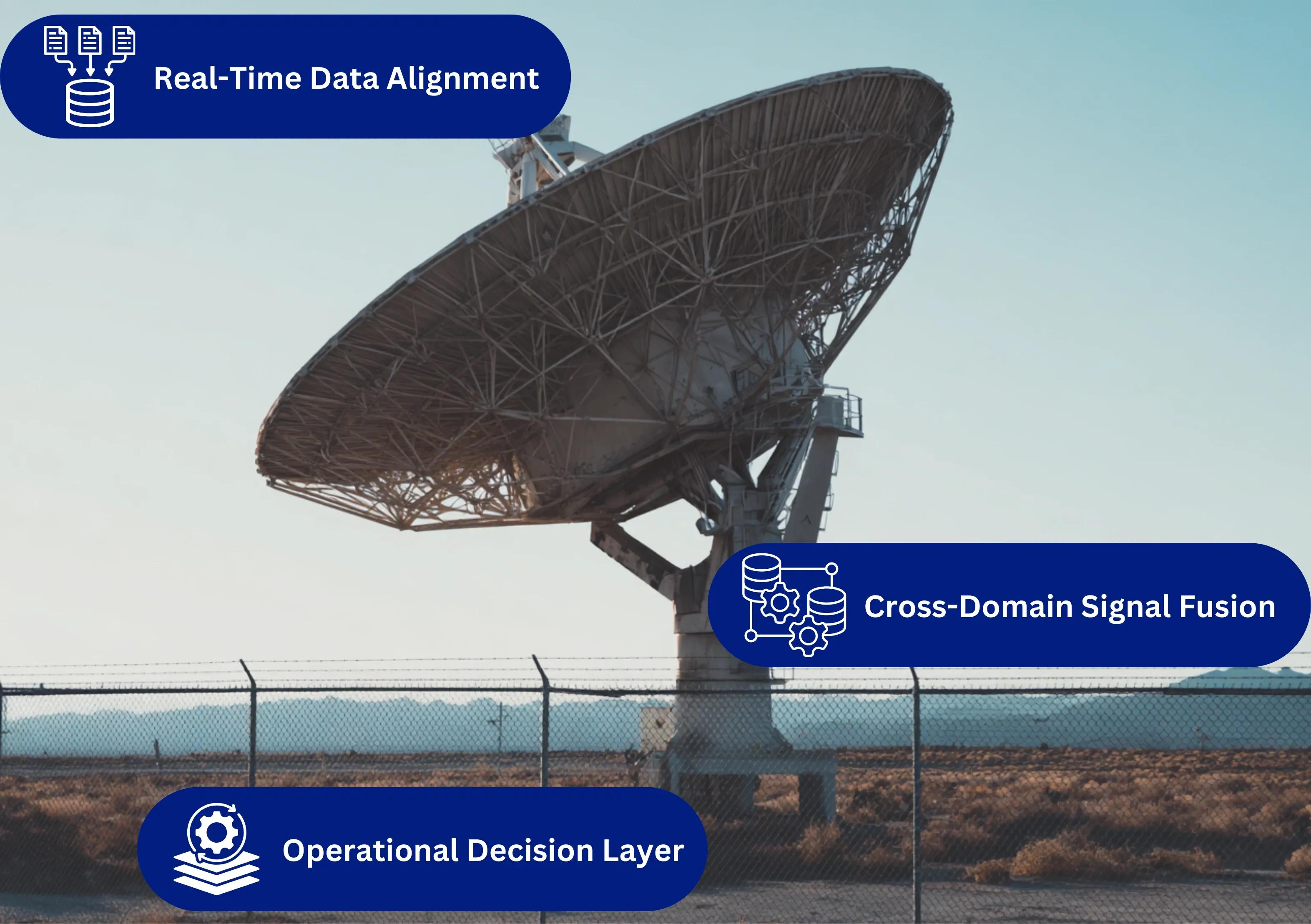
Mission Data Architecture
AI agents that structure, reconcile and align multi source mission data into reliable decision ready outputs.
Key Agents:
💠 Multi Source Data Synthesiser: Integrates multi spectral imagery, telemetry and external datasets into a unified analytical layer.
💠 Cross Domain Sensor Fusion Agent: Combines optical, radar and IoT signals for maritime, climate or security intelligence.
Why Work with ADSP?
.webp&w=3840&q=75)
10+ Years Building Production AI
Trusted by Fortune 500s, we build secure AI solution to turn bold ideas into resilient, production-grade tools.

Certified Excellence
We’re ISO 9001 (Quality) and ISO 27001 (Security) certified — trusted to deliver compliant, enterprise-ready AI systems.

Thought Leaders in Agentic AI
With bestselling authors and experts in AI governance, we lead with ideas that drive responsible, scalable AI across industries.
Trusted by Industry Leaders